
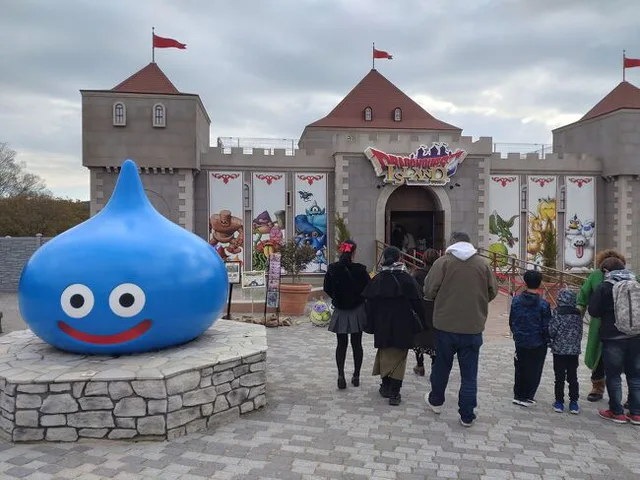
Nijigen no Mori tickets in 30 seconds: free entry is why three paid IPs can be the expensive mistake
The most important fact about Nijigen no Mori is not a ticket price. It is that the park itself has no general admission fee. You pay for individual IP attractions such as NARUTO & BORUTO Shinobi-Zato, Dragon Quest Island, Godzilla Interception Operation, Crayon Shin-chan Adventure Park and limited-time events. That changes the buying logic completely: you are not choosing a “park ticket.” You are choosing which one or two worlds deserve most of your day.
For a first visit from Osaka or Kobe, the safest default is one flagship IP plus one secondary attraction. A third major ticket often looks harmless on the checkout screen, but it competes with walking across a large outdoor park, timed reception windows, lunch, children’s energy and the bus or drive back off Awaji Island. The hidden loss is not another ¥3,000–¥5,000. It is paying for an experience you rush because the day has no room left.
If this is one day inside a wider Kansai trip, treat Nijigen no Mori as a full-day decision before you buy anything. If you are still deciding whether to base yourself in Osaka, start with Where to Stay in Osaka for First-Time Visitors. If the real choice is Namba or Umeda, Namba vs Umeda matters because your hotel-to-bus-start journey is part of the day, not background logistics.
↔ Scroll table left or right
IP / attraction | Adult starting range | When an upgrade makes sense | The constraint that can ruin the plan |
NARUTO & BORUTO Shinobi-Zato | Light ¥3,300–4,100 | Gold only if you specifically want the extra mission | Young children still need an accompanying paid adult; not every mission suits every age |
Dragon Quest Island | Light ¥3,400–4,500 | Gold if you will actually do the subquest; Premium mainly when the merchandise is part of the purchase | The quest format takes real time, so stacking it with two more flagship IPs is the bigger cost |
Godzilla Interception Operation | Light ¥2,800–3,600 | Gold if the museum / special-effects content matters to you | Zipline requires at least 120 cm and 25 kg, and under 110 kg |
Crayon Shin-chan Adventure Park | Light ¥3,500–4,300 | Gold if zipline and the extra themed areas matter | 120 cm / 25 kg changes what children can actually do |
Attack on Titan THE NIGHT WALK | ¥3,600–4,000 | No conventional upgrade decision; decide whether the night slot is worth reshaping your day | Runs through Dec 13, 2026; about 1.2 km, timed, and strollers / wheelchairs cannot be used on the night route |
Next decision|See where an Awaji Island day actually fits in an Osaka–Kobe itinerary
You Are Not Buying “Nijigen no Mori” — You Are Choosing Which 1–2 IPs Get Your Day
Searching for “Nijigen no Mori tickets” encourages the wrong mental model. There is no single must-buy gate ticket that unlocks everything. The prefectural park is free to enter, while the major IP experiences are sold separately. That means the first question is not “Which website is cheapest?” It is “What am I actually here for?” A Naruto fan, a Dragon Quest player, a family with a child under 120 cm and someone staying for the Attack on Titan night event need different arrival times, different ticket tiers and sometimes different parking areas.
For most first-timers, choose one IP that would make the trip worthwhile even if the second plan failed. Then add a second attraction only if its location, timing and physical requirements still fit. This is especially important because many of these experiences are not quick photo zones. They involve mazes, mission rallies, walking, pre-shows or outdoor activity. The third ticket is where “I want to see everything” often becomes “we spent the whole day checking the clock.”
NARUTO & BORUTO: Light Is the Clean Default Unless You Already Want a Specific Extra Mission
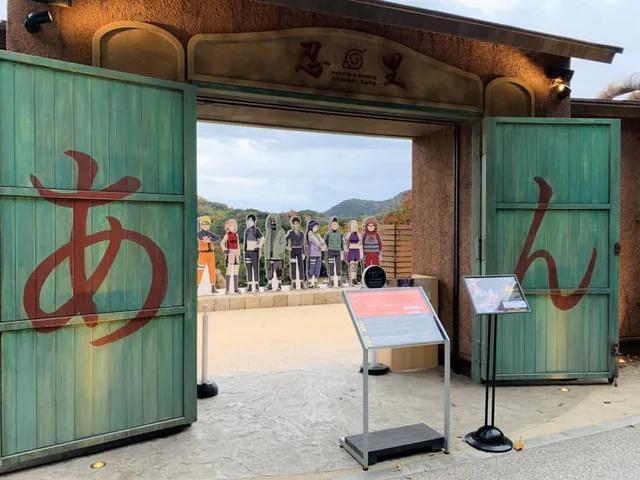
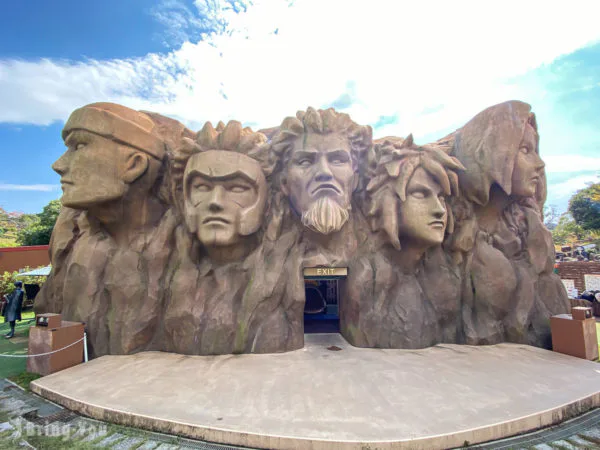
The current official price range for NARUTO & BORUTO Shinobi-Zato starts at ¥3,300–4,100 for an adult Light Ticket. That includes entry to the area, the Heaven Scroll 3D maze, the Earth Scroll mission rally and projection mapping after dark. Gold is ¥4,800–5,600 and adds one special mission. Higher premium tiers jump much further because the package increasingly includes special missions and merchandise rather than simply unlocking the basic Naruto area.
That makes the upgrade rule unusually simple. If your goal is the main maze, mission route, character environments and the core Shinobi-Zato experience, start with Light. Move to Gold only after you know which special mission you want. “I am a big Naruto fan” is not enough by itself; if you have not even checked the added mission, paying first and researching later is buying uncertainty.
Families also need to separate “free child entry” from “free family cost.” Very young children may enter under different rules, but elementary-school-age children and younger require an accompanying guardian, and the adult needs the appropriate ticket to enter with them. So a child being free or cheaper does not remove the adult accompaniment cost. Check the exact mission age rules before deciding that the Naruto area is automatically the easiest family choice.
Dragon Quest: Gold Buys More Gameplay; Premium Mostly Makes Sense When the Merchandise Is the Point
Dragon Quest Island currently lists adult Light Tickets at ¥3,400–4,500 and Gold at ¥5,400–6,500. The important difference is functional: Light covers the main quest, while Gold adds the subquest. Premium rises to ¥12,400–13,500 and includes Gold content plus premium merchandise. That is a very different kind of upgrade from paying a little more for extra gameplay.
If you want the main story and the feeling of walking through a Dragon Quest adventure, Light is the default. If you know you will complete the subquest, Gold has a clear reason to exist. Premium only becomes rational when the limited merchandise is itself something you would have bought. Do not justify the price with “we came all the way to Awaji Island.” The ticket can add goods; it cannot add hours to the day.
Dragon Quest is also the clearest example of why two flagship IPs can already fill the useful part of a day. It is an outdoor quest, not a five-minute ride. If the first quest runs long, your next paid reception window starts competing with lunch and movement across the park. That is why a Dragon Quest + one secondary attraction plan is often stronger than Dragon Quest + Naruto + Godzilla just because all three sound good on paper.
Godzilla: Light Already Includes the Zipline — Gold Is the More Logical Choice for Museum Fans
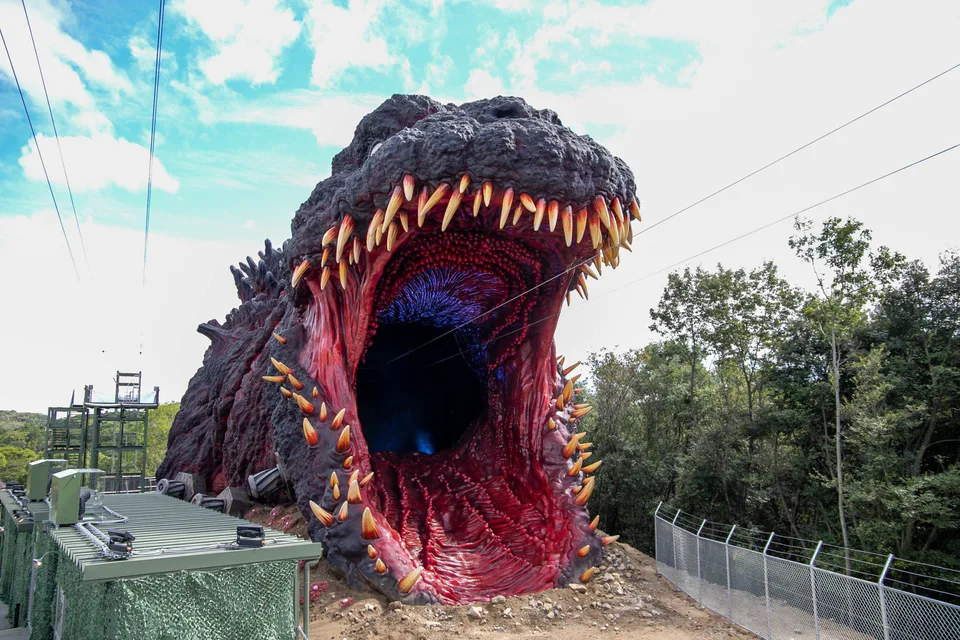
Godzilla Interception Operation has a slightly counterintuitive ticket structure. Adult Light Tickets are currently ¥2,800–3,600 and already include the pre-theater, one zipline experience and Godzilla Cell Shooting. Gold, at ¥4,800–5,600, adds content such as the Godzilla Museum and special-effects studio. So if your mental picture of a “complete Godzilla visit” includes the museum, the cheapest ticket may not match what you actually came to see.
Before you buy, check height and weight. The current official criteria for the zipline use a 120 cm minimum height and at least 25 kg, with a maximum below 110 kg. This is not a preference that staff can casually waive. If a child does not meet the requirements, research the child-specific alternatives first instead of building the family plan around the adult zipline experience.
For adults who mainly want the huge Godzilla set piece and one headline physical activity, Light can be enough. For a film fan who also values props, exhibits and the museum side of the franchise, Gold has a much clearer return than a vague “premium” upgrade elsewhere. The decision comes from which content you will use, not which ticket name sounds complete.
Crayon Shin-chan: 120 cm and 25 kg Can Change the Family Ticket Before Price Does
Crayon Shin-chan Adventure Park currently lists adult Light Tickets at roughly ¥3,500–4,300. Light is centered on the athletics course and does not include the zipline. Gold, around ¥5,600–6,400, adds the zipline and more themed facilities, while Premium adds further puzzle content and additional access. On paper that can look like a normal “pay more, get more” ladder.
For families, however, the more important ladder is physical eligibility. The official ticket structure uses 120 cm and 25 kg as major dividing lines for some experiences, with different child or kids courses when those thresholds are not met. That means buying the same tier for everyone does not guarantee everyone will receive the same experience. Measure first; upgrade second.
This is why “family trip = buy Gold” is too simplistic. If the child is below the zipline threshold and the adults are not interested in repeating attractions without them, the extra money may buy features the group cannot use together. In that case, the cheaper tier is not a compromise — it is simply better aligned with the group.
Attack on Titan in 2026: Treat the Night Walk as the Main Event, Not a Fourth Add-On
The current Attack on Titan collaboration is scheduled through December 13, 2026. THE NIGHT WALK – Beyond the Wall – is a roughly 1.2 km night route using projection mapping and immersive sound, with a typical experience time around 90 minutes. Adult night tickets are currently in the ¥3,600–4,000 range depending on date. This is not a small indoor extra you tack on after a packed day.
The biggest trade-off is that the event pushes your day into the evening. The August operating notice currently places the night event in the evening with a last reception around 20:30, while the exact opening time changes by date. The official rules also state that strollers and wheelchairs cannot be used on the night route for safety. Families with young children need to treat the 1.2 km walk and late return as real constraints, not fine print.
If Attack on Titan is your main reason to visit, build the day around it: one major daytime IP, a proper meal and rest buffer, then the night walk. If it is your fourth ticket after Naruto, Dragon Quest and Godzilla, you are buying a schedule that assumes nothing runs late and nobody gets tired. That is the fragile plan.
The 2026 Timed-Entry Rule Changes How You Should Buy the Second Ticket
A very useful current operating rule appears in Nijigen no Mori’s August 2026 notice: if a time slot has no stock on the official online ticket site, that slot is sold out and same-day tickets for that slot will not be sold on site. So “we will decide the second big IP when we get there” is not always a recoverable plan during busy periods.
At the same time, the printed online ticket time is a reception window, not a one-hour time limit inside the attraction. The official example says a 10:00 ticket is received from 10:00–10:59, and after reception there is no equivalent one-hour cap on your stay in that area. This is exactly why stacking multiple reception windows too tightly is a mistake: the first attraction is allowed to take the time it actually takes.
There is some recovery if traffic makes you late: the current notice says staff may guide delayed guests to another time during business hours rather than immediately invalidating the ticket. But that is not the same as a flexible open ticket. Build buffer between two paid areas instead of relying on staff to rescue a schedule designed with no margin.
Access: “About 1 Hour from Osaka” Is Only the Headline — There Is No Rail Station at the Park
Nijigen no Mori sits inside Hyogo Prefectural Awajishima Park. The official access guide summarizes the journey as roughly one hour from Osaka and around 30 minutes from Kobe, but the park has no railway station. Public-transport visitors use highway buses and connecting routes from places such as Umeda, Namba, Sannomiya and Maiko. The useful number is therefore not “one hour.” It is hotel door → bus boarding point → waiting time → park stop → walk to your first IP → return bus.
This is where hotel location changes the friction. If you are still choosing between Osaka bases, Namba vs Umeda helps because your bus start can matter more on this day than access to one subway line. If your wider trip already includes Kobe, Where to Stay in Kobe: Sannomiya or Shin-Kobe? can make an Awaji day feel much less like a detour.
Driving also benefits from choosing the IP order first. The official access page lists different nearest parking areas for different attractions. F Parking Lot is closest to Dragon Quest Island, Godzilla Interception Operation and TOKYO SCRAMBLE, while other areas sit closer to Naruto, Crayon Shin-chan and the Attack on Titan side. If you only plan two paid experiences, parking near the first anchor attraction can save more family energy than chasing a small ticket discount.
A Better Day Has Three Blocks: Main IP, Buffer, Second IP
Do not plan Nijigen no Mori by assigning each paid ticket exactly 60 or 90 minutes. Plan three large blocks instead. Give the morning to your must-do IP, reserve the middle of the day for walking, food and recovery, then place the second IP in the afternoon. Attractions here often involve solving missions, waiting for instructions, outdoor walking or physical activity. The schedule needs elastic time.
If Dragon Quest or Naruto is the anchor, a second attraction with a clearer endpoint — such as Godzilla for a group that meets the zipline rules — can be easier to control than another long mission-based experience. If a child’s real priority is Crayon Shin-chan, put that earlier while energy and patience are highest. The best order is not universal; the best order protects the one experience you would be most disappointed to cut short.
This is also why three paid flagship IPs are not automatically better value. A third ticket converts your lunch, bathroom breaks, walking time and travel delays into “wasted ticket time.” The itinerary starts serving the tickets instead of the family.
Summer Heat and Rain Increase the Cost of an Overbooked Day
Nijigen no Mori’s appeal comes from putting these IP worlds inside a huge outdoor park. The same design makes weather part of the product. Current operating notices explicitly say attractions may close depending on weather, and summer schedules can shift or open earlier. During busy summer periods, the park also warns about heavy traffic and full parking around Awaji Island.
A weather-resilient strategy is to make one IP valuable enough that the day still feels worthwhile if the second plan changes. The opposite strategy — three prepaid outdoor experiences plus a night event — creates a large sunk-cost problem when heat, rain or fatigue hits. The more you prepay, the harder it feels to cut something even when cutting it is the sensible decision.
If You Only Have Four Days in Osaka, Nijigen no Mori Must Compete with USJ or Kyoto for a Full Day
The biggest itinerary mistake is not choosing the wrong ticket tier. It is treating every “day trip” as if it fits without displacing anything else. If you already have Universal Studios Japan and also want Kyoto, giving another complete day to Awaji Island can leave almost no useful time for Osaka itself. Use Osaka and Kyoto 4-Day Itinerary With USJ: Does Kyoto Still Fit? to make the full-day trade-off explicit.
Nijigen no Mori is easier to justify when the trip already passes through Kobe. Osaka Itinerary: 4 Days with Kobe and a Koyasan Temple Stay shows the larger routing logic: once Kobe is part of the structure, Awaji Island can become a more coherent extension instead of a separate out-and-back day from central Osaka.
For a first Kansai trip based entirely in Osaka, Kyoto vs Osaka: Where Should First-Time Visitors Stay? is the more important decision before you commit another fixed day. Nijigen no Mori is strongest when one IP is a genuine priority, not when it is simply another famous place you feel obliged to collect.
NO-GO: Do Not Buy Premium Tiers or Three Major IPs Yet If Any of These Apply
First, you have not checked the child’s height and weight even though Godzilla or Crayon Shin-chan zipline content is part of the plan. Second, you know you “like Naruto and Dragon Quest” but have not checked what Light and Gold actually add. Third, you are doing an Osaka day trip with Attack on Titan at night but have not confirmed the return journey. Fourth, your Kansai trip is only three or four days and USJ, Kyoto and Nara are already fixed.
In all four cases, buying more now reduces flexibility. The correct next move is to resolve the constraint — physical eligibility, ticket content, transport or itinerary capacity — and only then decide the tier. A premium ticket is not insurance against a weak plan.
Final Verdict: Lock One Main IP First; Add the Second Only After Transport and Energy Still Fit
For a first Nijigen no Mori visit, use a simple rule. Choose Naruto or Dragon Quest as the main mission-style anchor if one of them is your strongest interest. Add Godzilla or Crayon Shin-chan only after checking the group’s physical requirements and the distance between areas. If Attack on Titan THE NIGHT WALK is the main reason for the trip, shorten the daytime plan instead of treating the night event as a fourth stop.
Light-to-Gold upgrades only make sense when you can name the extra content you intend to use. Premium tiers only make sense when the added merchandise or special access is already part of your purchase goal. Before payment, verify five things: your date’s live price and reception window, children’s height and weight, the location of your first and second IP, the actual outbound and return transport, and the end date of any limited-time event.
Only after those five checks should you compare sales channels. Trip.com currently has an exact Nijigen no Mori attraction listing, so the useful click is not “see deals”; it is to compare what your date is actually selling after you already know which IP and time window you need.
Trip.com|Check which Nijigen no Mori ticket options are actually sold for your date
Affiliate note: ValueNavi may earn a commission from a qualifying Trip.com booking, at no extra cost to you.
Hakone Open-Air Museum 2026: 4:30 Is Last Entry, Not the Time You Should Arrive
Tokushima Awa Odori 2026: Tickets, Stages, Free Streets and Transport
Yamagata Hanagasa Festival Reserved Seats 2026: Is the ¥4,000 Seat Worth It? Paid vs Free Viewing
Nagashima Spa Land Tickets 2026: Do Not Buy the Same Pass for Everyone in Your Family
Sanrio Puroland Tickets 2026: Save on the 2 PM Pass Only If You Know What You’ll Skip
Sources
Nijigen no Mori official|Prices and business information
Nijigen no Mori official|Access from Osaka, Kobe and other areas
Nijigen no Mori official|Dragon Quest Island
Nijigen no Mori official|NARUTO & BORUTO Shinobi-Zato
Nijigen no Mori official|Godzilla Interception Operation
Nijigen no Mori official|Crayon Shin-chan Adventure Park
Nijigen no Mori official|Attack on Titan collaboration through Dec 13, 2026
Nijigen no Mori official|August 2026 operating and timed-entry rules
Image references use existing on-site photographs from Beauty321, BringYou, Time Out Osaka and 4travel. They illustrate established attraction areas and are not presented as photographs taken in 2026.