
The easiest way to overspend on a Tokyo budget hotel is to choose the cheapest nightly rate before choosing the cheapest trip structure. A room that saves ¥800–¥1,000 a night can still be the worse-value booking if it adds a transfer, a long suitcase walk or an inconvenient return every day. I would compare Tokyo hotels in this order: first the area against your itinerary, then the room against your luggage, then the booking conditions against the chance your plans change. Only after those three checks does the nightly rate become useful.
That changes what “budget” means. A smaller room beside the station can be a better budget decision than a larger room farther away; Ueno can be cheaper and easier for an east-Tokyo itinerary, while the same Ueno rate can be false economy if most nights end in Shinjuku. The goal is not to eliminate every inconvenience. It is to make sure the inconvenience you accept is actually buying a meaningful saving.
ValueNavi decision table: decide what kind of saving you are buying
↔ Scroll table left or right
Trade you are considering | When I would accept it | When I would pay more |
17–18 m² instead of a larger room | Solo/couple, light luggage, most of the day outside | Two large suitcases, long stay, shopping-heavy trip, child sharing the room |
Ueno instead of Shinjuku | Narita arrival plus several east-Tokyo days | Repeated Shinjuku/Shibuya evenings or west-Tokyo starts |
A smaller room in Shinjuku | The South Exit / airport-bus location removes daily or arrival friction | A roomier category is only slightly more expensive and luggage will stay open |
Shared laundry instead of better in-room laundry | Short stay or one planned wash | Long stay where laundry meaningfully reduces how much you pack |
Non-refundable instead of flexible | Flights, companions and dates are effectively fixed | Any material part of the itinerary can still move |
The useful calculation is not “price per night”; it is “saving per day of added friction”
Here is a simple way to make a vague trade-off measurable. First calculate the total stay saving. Then count the number of days on which the cheaper hotel creates an extra recurring inconvenience. Divide the first number by the second.
Example: Hotel B is ¥800 cheaper per night for six nights. That is ¥4,800 total, roughly US$30 at late-August 2026 exchange rates; exchange rates move, so treat the dollar figure as orientation rather than a booking price. If Hotel B creates one extra transfer on five itinerary days, you are effectively accepting each affected day for about ¥960 (roughly US$6) of saving. Some travellers will happily take that deal. With two large suitcases, young children, late-night returns or a tight schedule, I would usually want a larger saving before accepting it.
This is deliberately not a universal “¥960 rule.” The point is to expose the trade. A ¥1,000 (about US$6.30) nightly difference sounds meaningful in isolation; once you convert it into the number of days you must pay for it with time and energy, the decision becomes much easier to defend.
Separate daily costs from one-off costs before you compare hotels
↔ Scroll table left or right
Cost type | Examples | How much weight to give it |
Daily friction | Extra transfer, long station walk, awkward late-night return, cramped open luggage | High — it repeats |
One-off friction | Airport arrival transfer, one early Shinkansen morning | Medium — important, but do not let one day control six nights |
Optional / low-frequency feature | Breakfast you may skip, lounge you may not use, laundry on a two-night stay | Low unless your itinerary gives it a real job |
This is the part many “cheap hotel” lists miss. They compare room rates as if every hotel creates the same trip. In Tokyo, repeated movement is often the hidden variable. Narrow the city first with Where to Stay in Tokyo for First-Time Visitors. If four of five days are in west Tokyo, a small Ueno saving can be consumed by repeated friction even when the train fare itself is modest. The reverse is true for Narita plus Asakusa/Ueno-heavy itineraries; Ueno vs Shinjuku is the cleaner decision before comparing individual hotels.
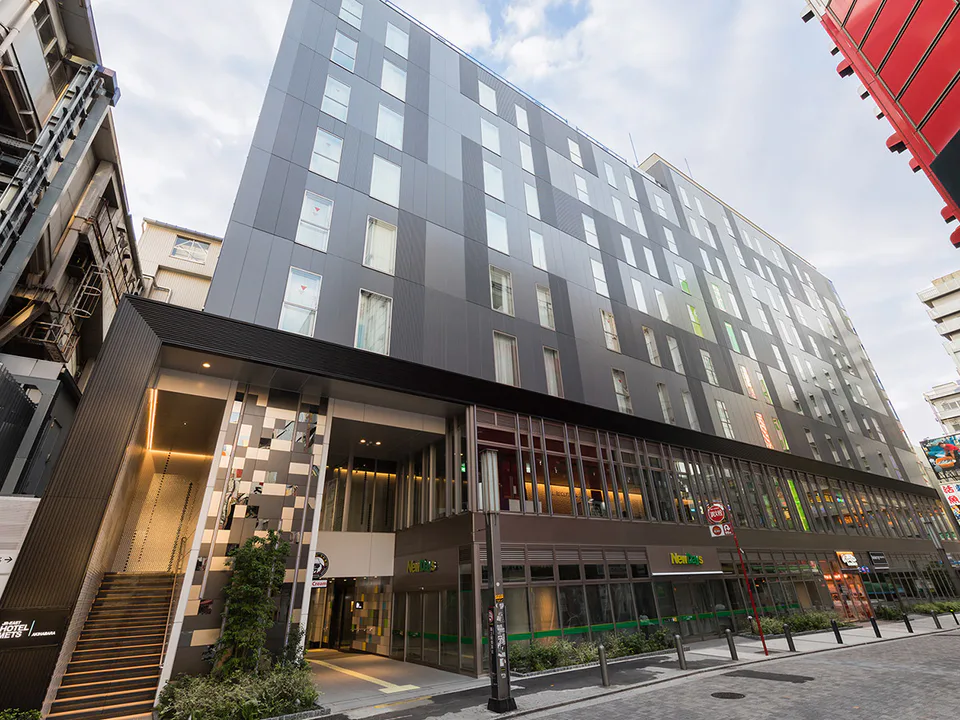
Mets Akihabara: 17 m² is the sacrifice; the one-minute station location is what you buy back
JR East Hotel Mets Premier Akihabara currently lists its Superior Double at 17 m², with a bathroom that has a separate washing area. The hotel describes itself as a one-minute walk from JR Akihabara Station. That makes it a useful budget case because the trade is unusually clear: you are not paying for floor area; you are protecting the final station-to-room leg you repeat every night.
I would favour that trade for a solo traveller or couple who packs compactly and uses Akihabara as a genuine transport base. I would be much less enthusiastic with two large open suitcases. Seventeen square metres does not become spacious because the station is close; the location only makes the room-size sacrifice easier to justify.
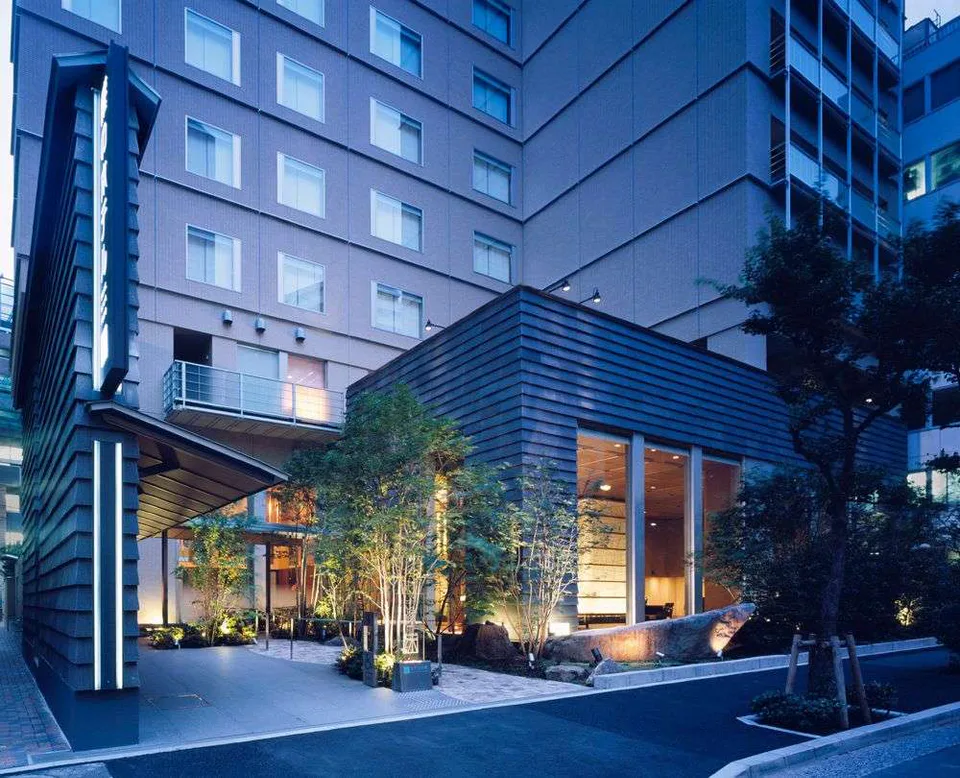
Hotel Niwa Tokyo: 18 m² in Suidobashi works best when your itinerary is genuinely spread out
Hotel Niwa Tokyo currently lists an 18 m² Standard Double, and its official access page puts JR Suidobashi East Exit about four minutes away on foot. It does not win by placing Shinjuku nightlife or Asakusa outside your door. Its budget logic is different: a relatively central, less headline-driven base can be rational when your days are distributed across Tokyo.
The boundary condition is simple. If almost every late return is Shinjuku or Shibuya, a cheaper room in Suidobashi may be asking you to solve the same west-Tokyo journey repeatedly. If your itinerary is balanced, the location becomes a useful compromise instead of a compromise you keep noticing.
Ueno: when Narita and east Tokyo line up, the location can save money without creating a second problem
Mitsui Garden Hotel Ueno currently lists several 18 m² Standard rooms. Its official access information puts the hotel about two minutes from JR Ueno’s Asakusa Exit, one minute from Tokyo Metro Exit 1 and six minutes from Keisei Ueno. Those distances matter because “Ueno” is not one platform: a hotel that works for JR may still require a different walk after the Skyliner.
For a Narita arrival plus several east-Tokyo days, this is the kind of location where a lower rate can remain a genuine saving. If most of your itinerary pulls west, do not choose Ueno because one OTA screenshot is cheaper. Compare Mitsui Garden Hotel Ueno vs NOHGA for the room/access trade, then return to Ueno vs Shinjuku for the bigger route decision.
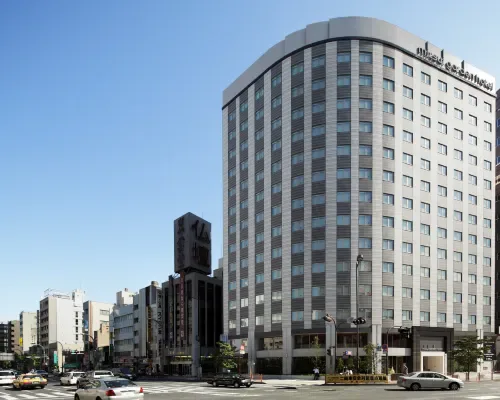
Sunroute: 15.7 m² is not automatically a bad budget room — but it is a poor blind booking for two big suitcases
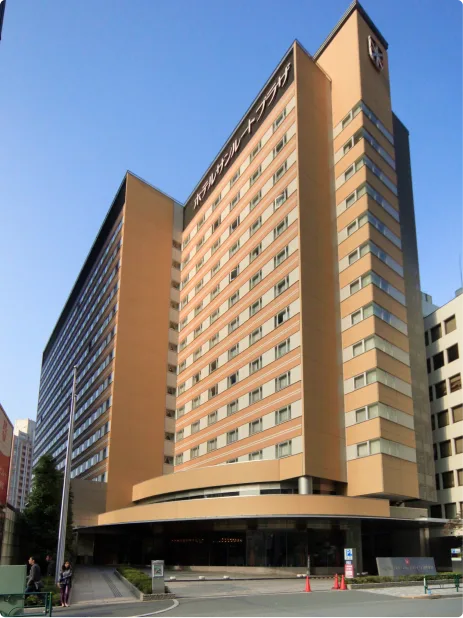
Hotel Sunroute Plaza Shinjuku currently lists a 15.7 m² Standard Single / Economy Double and an 18.7 m² Standard Double. Its official access information puts JR Shinjuku South Exit about three minutes away and lists airport limousine-bus access. This is exactly why room size should not be judged alone: the smaller category may buy a very useful arrival and daily location at a lower price.
But the luggage failure mode is obvious. Two people can legally fit in an economy double and still dislike living around two large open suitcases. If the 18.7 m² category is only modestly more expensive on your dates, I would compare the total stay upgrade cost rather than reacting to the nightly gap. If the upgrade becomes expensive enough to fund a meaningful part of the trip, accept the smaller room deliberately and pack around it.
Compare the same booking product before you call one hotel cheaper
Lock the same check-in and check-out dates, occupancy, bed requirement, breakfast inclusion and cancellation conditions. Then confirm whether taxes and fees are included. A non-refundable room and a free-cancellation room are different products even when an OTA places the two prices beside each other.
The most expensive booking mistake is sometimes not the room but the condition. If flights, event dates or companions can still change, the non-refundable discount is payment for accepting that risk. That can be a good trade when the plan is fixed. It is a bad trade when you are still treating the itinerary as provisional.
For a longer stay, multiply both the saving and the inconvenience
A ¥800 nightly difference becomes ¥4,800 (about US$30) over six nights. That multiplication is useful — but do the same to the friction. A feature you use once should not receive the same weight as something you encounter six times.
Laundry is a good example. On a two-night stay, a better laundry setup may be almost irrelevant. On a week-long trip it can reduce how much you pack, which then changes the room-space problem as well. Likewise, one early Shinkansen does not automatically justify paying a Tokyo Station premium for the entire stay. If an early departure matters, Tokyo Station vs Shinjuku helps test whether the final transport leg really deserves that much weight.
Final verdict: protect high-frequency value and cut low-frequency extras first
For most travellers, I would cut breakfast plans, lounge access, a fashionable district name or excess room features before I cut a location that matches the itinerary. I would accept a 17–18 m² room before accepting a bad daily route — unless luggage makes the room itself a daily problem. That is the key boundary condition: whichever inconvenience repeats most often deserves the highest weight.
If the cheaper hotel saves only around the cost of a casual meal over the whole stay, protect the room/location conditions you use every day. If the saving is large enough to fund another hotel night, an important attraction ticket or a meaningful transport cost, accepting a smaller room or less fashionable base becomes much easier to justify. There is no fixed Tokyo-wide threshold because rates change by date; the calculation above is designed to work even when the prices do.
Next decision: narrow Tokyo to the right stay area before comparing rates
Tokyo Disney Vacation Package Cancellation: What Changes Cost You in 2026
Nada no Kenka Matsuri 2026: If You Only Go One Day, Choose Oct 15
Early Flight or Late Arrival at KIX: Should You Move Hotels for the Last Night in Osaka?
Okinawa Resort Hotels: If You’re Out All Day, Stop Paying for Empty Afternoons
Sources
JR East Hotel Mets Premier Akihabara official guest-room information — rechecked August 27, 2026.
Hotel Niwa Tokyo official room and access information — rechecked August 27, 2026.
Mitsui Garden Hotel Ueno official room and access information — rechecked August 27, 2026.
Hotel Sunroute Plaza Shinjuku official room and access information — rechecked August 27, 2026.