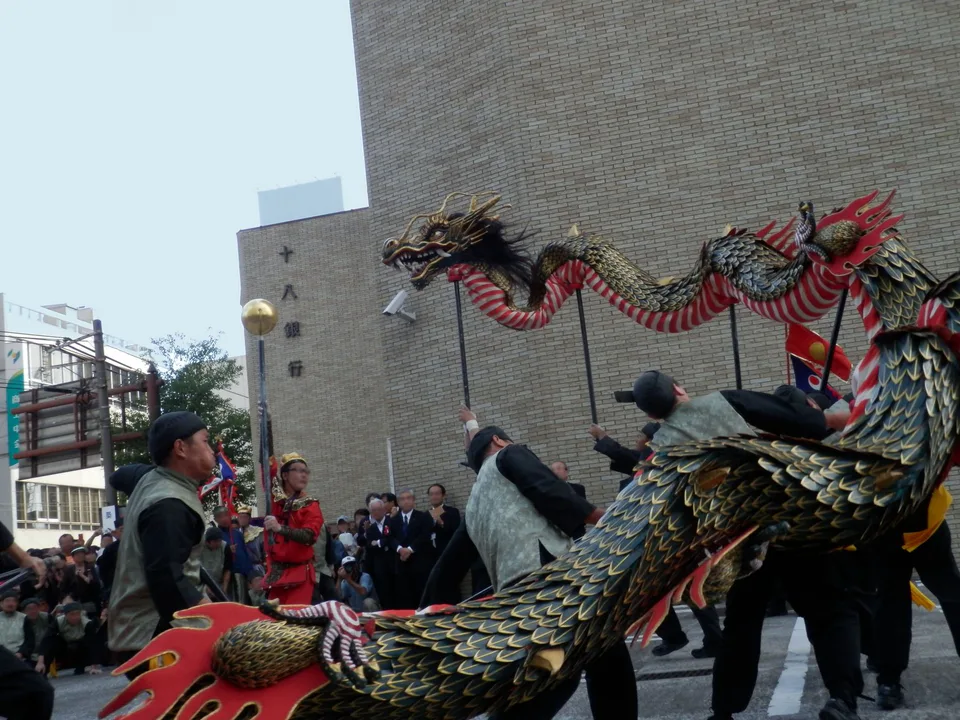
Choosing a Nagasaki Kunchi viewing venue is not a contest to find the most famous address. The 2026 festival runs October 7–9, and the four paid viewing areas—Suwa Shrine, Chuo Park, Otabisho and Yasaka Shrine—trade ceremony, physical effort, ticket format, flat access and closeness in different ways. The best venue is the one your group can actually enter, sit through and leave comfortably.
Build the performance into a Nagasaki 2-day itinerary rather than treating it as a separate three-hour block with no tram, walking, meal or recovery time. If Nagasaki is one branch of a wider route, the Kyushu 5- or 7-day itinerary helps decide whether the city deserves one or two nights around the festival.
The one-minute venue choice
Choose Suwa Shrine for ceremony and the classic shrine atmosphere. Choose Chuo Park when per-person ticketing and defined accessibility matter more. Choose Otabisho for flatter harbour-side access and street-festival bustle. Choose Yasaka Shrine when close-range impact matters more than having several scheduling options. If the hotel is still undecided, compare Nagasaki City, Huis Ten Bosch or Unzen before buying an early session that conflicts with the overnight location.
Before buying a seat: solve four questions first
First, confirm whether the current product is sold per person or by box. A cheap-looking box is not automatically cheap for one or two travellers, while a per-person Chuo Park seat can be easier to understand. Second, confirm the session and arrival time. Third, check whether everyone can manage the seating style and physical approach. Fourth, decide what the group must do immediately afterwards—eat, return to the hotel, collect luggage or catch a train. Ticket price only makes sense after those four costs are visible.
If the trip changes hotels around Nagasaki, remove the main suitcase from the festival day. The Japan luggage-forwarding guide is more useful than carrying a large case through festival streets or up shrine approaches.
Suwa Shrine: strongest ceremony, highest physical cost
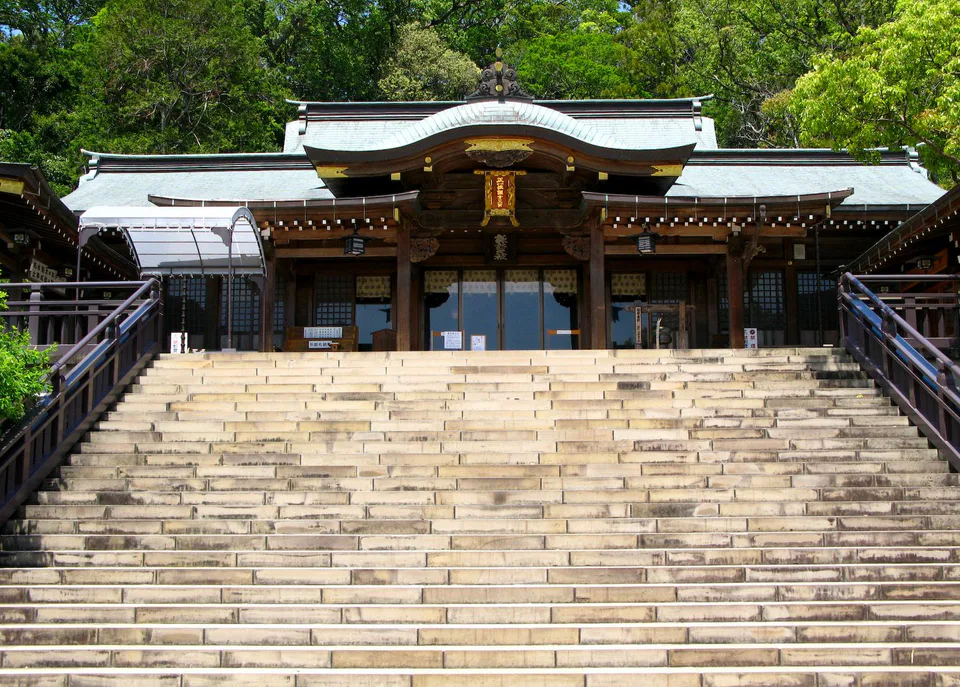
Suwa Shrine is the venue to choose when the shrine setting is part of the reason for travelling. The trade-off is the approach: stone stairs and dense festival movement can turn an iconic seat into the hardest option for knees, small children and anyone who arrives already tired. The best Suwa plan starts earlier than the ticket time because the last part of the journey is not just a tram ride.
A Suwa session works poorly immediately after a late transfer from Fukuoka. Rail travellers should compare the Northern Kyushu Rail Pass with point-to-point tickets before assuming a pass compensates for a badly timed first night.
Chuo Park: the easiest paid default for many travellers
Chuo Park is the practical default when the group wants a clear per-person seat rather than solving a multi-person box. It also offers defined wheelchair options. The setting is less ceremonial than Suwa Shrine, but lower physical friction can produce a much better day. Families should still decide whether children can remain seated through the programme and where the group will recover afterwards. Use the Nagasaki 2-day route to keep Peace Park, the southern heritage district and Mount Inasa from competing with the same energy window.
Otabisho: flatter access plus street-festival atmosphere
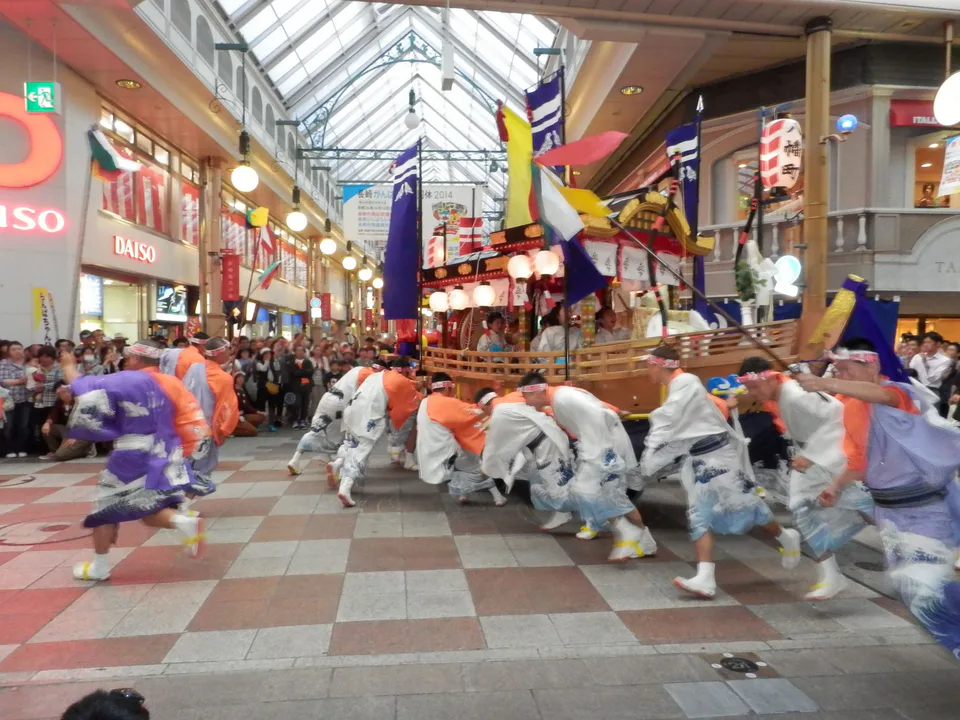
Otabisho works when stalls, harbour-side movement and the temporary-shrine atmosphere are part of what you want. The flatter setting removes one kind of physical difficulty, but festival-day pedestrian flow still matters. Solo travellers and pairs should confirm the current ticket format before paying. If the holiday continues to an onsen stay, compare Unzen Nita Pass and the Japan ryokan selection guide before creating a same-day festival-to-ryokan transfer with a fixed dinner deadline.
Pair this with
Pair Kunchi with the Kyushu itinerary if Nagasaki is one branch of a larger trip. For autumn travel, the Kyushu autumn timing map and the 5- or 7-day Kyushu autumn route help decide whether Nagasaki should replace another remote sector rather than sit beside it.
Yasaka Shrine: buy proximity only when flexibility matters less
Yasaka Shrine is attractive when you want to feel the calls, turns and force of the performances at close range. That does not mean photographers can move freely: paid seating, sightlines and emergency passages still control the usable space. If photography is the only reason for choosing the closest venue, compare the wider festival trade-offs in Japan Summer Festivals Compared before making a high-friction venue the centre of the trip.
Morning session, later session and the rest of the day
An early session protects the rest of the day only when the group has slept in Nagasaki and can reach the venue calmly. It is a poor choice after a late arrival, a hotel breakfast that starts too late or a long luggage transfer. A later session gives more morning flexibility but can push dinner, Mount Inasa or onward rail into the same evening. Treat the session as the anchor of the day, then place one low-friction activity around it rather than trying to preserve a normal sightseeing schedule.
If the next sector is Aso, Kurokawa or Yufuin, the morning after Kunchi matters more than one additional night view. The Kyushu Odan Bus guide shows why reserved rural transport should be protected before adding another festival-hour commitment.
Weather, mobility and the exit are part of the ticket
Weather procedures and refunds differ by venue, so read the exact seller conditions rather than assuming all four viewing areas behave the same way. For reduced mobility, the flatness of the final approach, toilet access and the post-performance crowd can matter more than the nominal distance from a tram stop. Build an exit point before the performance starts; do not wait until everyone is standing at once to decide which tram or street to use.
If the journey after Nagasaki spans several Kyushu regions, use the Kyushu car vs public transport guide to decide whether a rental car solves the next sector or simply creates parking work during the festival.
Final choice
Choose Suwa for ceremony and accept the steps. Choose Chuo Park for the easiest paid default and defined accessibility. Choose Otabisho for flatter access plus street-festival atmosphere. Choose Yasaka for close-range impact when schedule flexibility matters less. If the route returns to Fukuoka before flying out, a station-side final night such as the one discussed in the JR KYUSHU HOTEL Blossom Hakata Chuo guide can protect the departure better than extending the festival trip unnecessarily.
Munakata Shrine & Izu Honten Day Tour: I’d Pay for the Route, Not the Four Stops
Hakone Open-Air Museum 2026: 4:30 Is Last Entry, Not the Time You Should Arrive
JR Kyushu Hotel Nagasaki | Nagasaki Station, Kunchi and room choices
References
Nagasaki Kunchi official site — 2026 ticket information · English viewing-area guide · Otabisho ticket guide. Rechecked August 16, 2026.