
For a solo Tokyo trip, choose the hotel by the repeated problem it removes—not by the smallest room you can physically fit into. A 13.7–18 m² private room can be an excellent trade when it buys a one-minute station walk, a late-night base where your evenings actually end, an in-room washer-dryer or a bathroom you will genuinely use. The same room can be poor value on a week-long shopping trip if your suitcase stays open on the floor and the hotel is on the wrong side of Tokyo every night.
The solo advantage is precision: you do not have to average two people’s preferences. Use that freedom deliberately. Start with the final hour of at least three evenings, then decide how much room space you can trade away. For one or two nights, I would accept a more aggressive space-for-location swap. For five to seven nights, laundry, luggage circulation, desk space and how long you actually sit in the room become much more important.
↔ Scroll table left or right
Your trip pattern | Start with | What the premium buys | Main reason to reject it |
Akihabara / Ueno / Tokyo Station-heavy | JR East Hotel Mets Premier Akihabara | About 1 minute from JR Akihabara + 17 m² + bathroom with a separate washing area | Five-plus nights with a large suitcase and heavy shopping can make 17 m² the real cost |
Late nights in east Shinjuku / Kabukicho | Hotel Gracery Shinjuku | The evening ends near the hotel instead of with another cross-Shinjuku walk | Your transport anchors are actually South Exit, highway buses or Hakone-bound |
You want a quiet reset and usable desk | Hotel Niwa Tokyo | 18 m² Standard Double, writing desk and a calmer Suidobashi return | You use the hotel only to sleep and would rather buy nightlife proximity |
Five–seven nights, laundry matters | Tokyu Stay Shinjuku Eastside | 18 m² Comfort Double with washer-dryer; 20 m² Residential Double adds kitchenette | You only stay two nights or need JR Shinjuku directly outside the door |
Shibuya / Harajuku is the centre of the trip | sequence MIYASHITA PARK | 13.7 m² single room plus Shibuya location and 14:00 checkout | The 17:00 check-in damages your arrival day, or you need more room/desk time |
Use the “last hour” test before comparing hotels
Map where you realistically expect to be after 21:00 on at least three nights. That is usually more useful than asking which Tokyo neighbourhood is “best for solo travellers.”
If three nights end around Shinjuku, Shibuya and Harajuku, choosing Ueno only because the Narita arrival is convenient can turn one easy airport transfer into three late-night detours. If most days end around Ueno, Asakusa, Akihabara or Tokyo Station, the opposite is true. One airport ride should not automatically choose a five-night base.
This is also why “Shinjuku” is not a complete answer. East Shinjuku, South Exit and the highway-bus side solve different final-hour problems. Use the Shinjuku vs Shibuya comparison or Ueno vs Shinjuku before paying a hotel premium for the wrong side of a major station.
A 17 m² room works when the station is doing real work
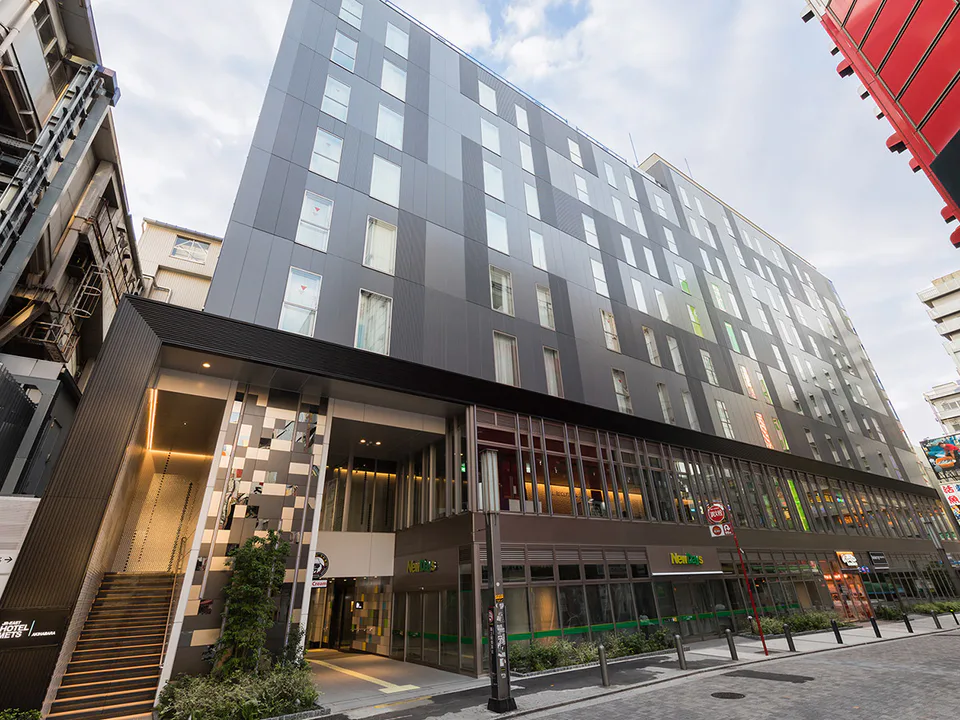
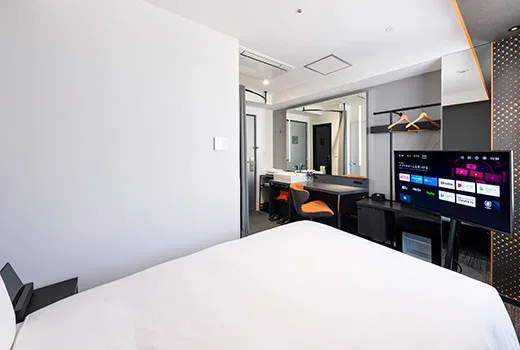
JR East Hotel Mets Premier Akihabara is a clean example of a rational small-room trade. The hotel currently lists its Superior Double at 17 m² for one or two guests with a 160 cm bed and a bathroom with a separate washing area. Its official access page places the hotel about one minute from JR Akihabara Station’s Electric Town South Exit.
For a solo traveller whose itinerary repeatedly uses Akihabara, Tokyo Station or Ueno, that location can be worth more than another 5–8 m² somewhere else. Tokyo Station is also only a short JR ride away, so a Shinkansen-heavy trip can use the location efficiently without paying Tokyo Station hotel prices.
But “one person fits” is not the right test. A 28-inch suitcase, shopping bags and a week of belongings still occupy floor area. If the room forces you to close the suitcase every time you walk to the bathroom, the station premium has started to create a room-use penalty.
Hotel Gracery Shinjuku is a late-night-location choice, not a universal Shinjuku choice
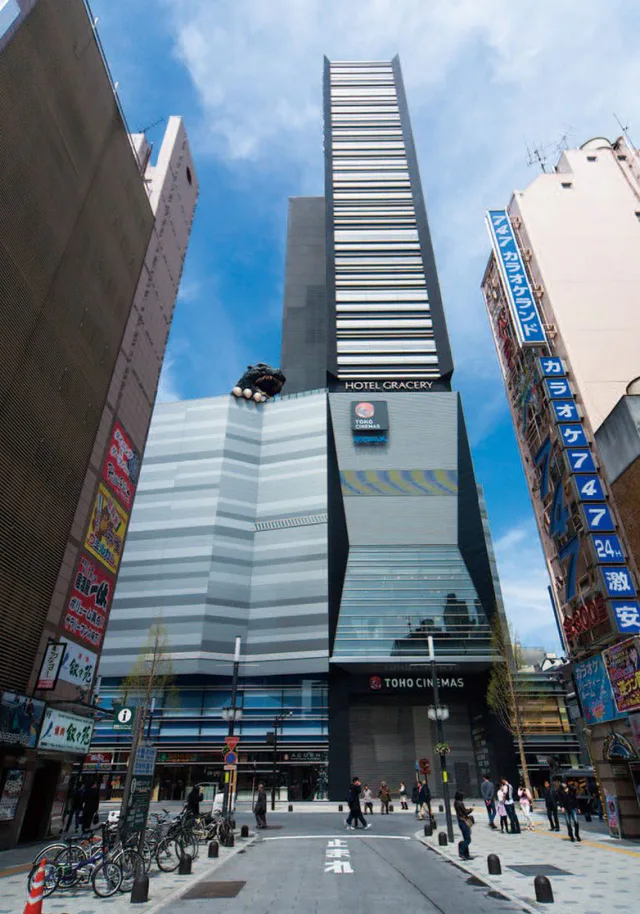
Hotel Gracery Shinjuku currently lists about five minutes on foot from JR Shinjuku East Exit and about three minutes from Seibu-Shinjuku, with check-in from 14:00 and checkout at 11:00.
That geometry is useful when your evenings genuinely finish in Kabukicho or east Shinjuku. The hotel premium buys the deletion of one last detour after dinner, bars, entertainment or a very late return.
The answer reverses if you repeatedly use Shinjuku Expressway Bus Terminal, travel toward Hakone or spend more time around the South Exit and west/south side. In that itinerary, “staying in Shinjuku” can still leave you crossing one of Tokyo’s largest stations every day. Pick the station side before the brand.
Hotel Niwa shows when 18 m² can be a hotel upgrade, not a compromise
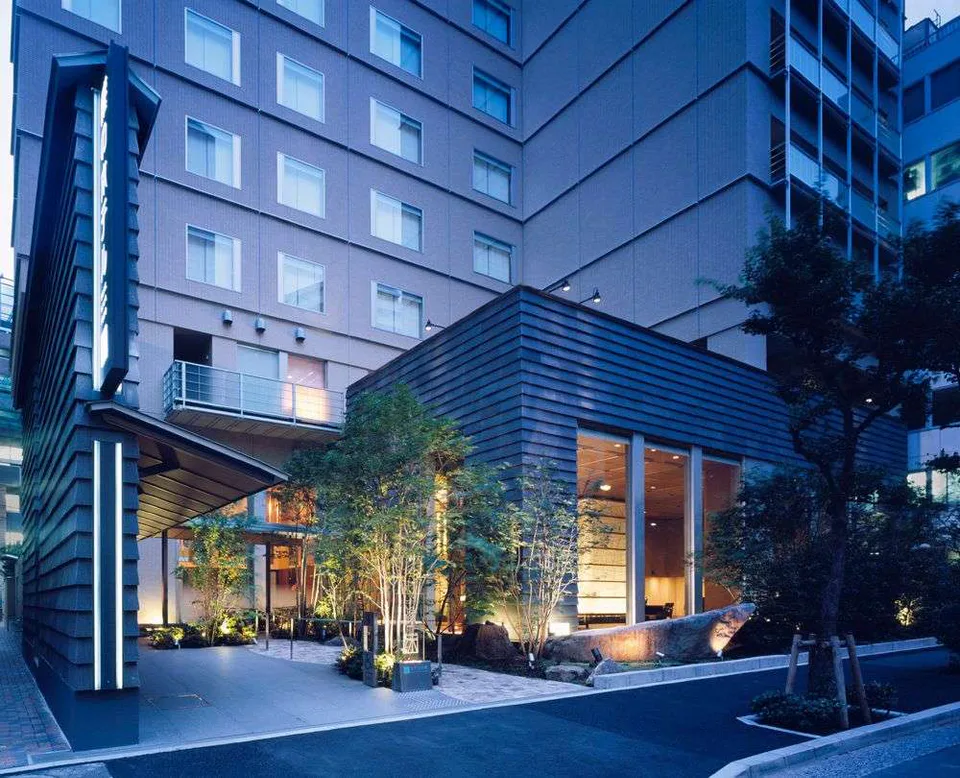
Hotel Niwa Tokyo currently lists its Standard Double at 18 m² with a 160 cm bed and writing desk. The official access route is about four minutes on foot from JR Suidobashi East Exit.
Its value is not that Suidobashi is Tokyo’s most exciting nightlife area. It is that a solo traveller can use the hotel as a deliberate reset point: come back, work or organise photos at a real desk, then end the day instead of continuing another neighbourhood loop.
That premium is wasted if you leave at 07:00, return at midnight and never use the room beyond sleep. In that case, buy a more convenient late-night location instead. Solo travel makes this decision easier because no second person needs a lounge, bathtub or quieter neighbourhood.
For five to seven nights, count laundry uses instead of room features
Tokyu Stay Shinjuku Eastside changes the calculation because its current room inventory includes an 18 m² Comfort Double with washer-dryer and a 20 m² Residential Double with washer-dryer plus kitchenette.
The useful question is not “does the hotel have laundry?” It is how many times will that washer change the trip? If you plan to wash twice, pack two or three fewer outfits and avoid a laundromat run, the feature is doing real work. It can be worth more than another few square metres.
If the stay is two nights, the same washer may never be used. Then it becomes spec-sheet value rather than traveller value. The other cost is station geometry: Shinjuku Eastside is useful for Higashi-Shinjuku and Shinjuku-sanchome, but it is not a JR Shinjuku doorstep hotel.
sequence MIYASHITA PARK proves that check-in time can matter more than room size
sequence MIYASHITA PARK currently lists its one-person Double at 13.7 m². That is small, but a solo traveller with one carry-on can make it work if Shibuya and Harajuku dominate the trip.
The bigger operational question is the hotel’s unusual schedule: check-in begins at 17:00 and checkout is 14:00. That can be excellent when the departure day is slow and you want the room into early afternoon. It can be poor on an arrival day when you land in Tokyo before noon and want to shower, work or reset before dinner.
The hotel does store luggage before check-in and after checkout, so the 17:00 rule does not trap your suitcase. It does, however, remove private-room access for a large part of the afternoon. If “I need my room by 15:00” is a hard arrival-day requirement, do not let the Shibuya location override it.
One to two nights: location can dominate the room
For a one- or two-night solo stay, room functions have fewer chances to repay their premium. You may never use the washer, kitchenette, desk or larger wardrobe. In that scenario, I would trade space more aggressively for a location that deletes the arrival transfer, the late-night return or the departure-morning problem.
This is especially true for a short stop before a Shinkansen, concert, theme park or flight. A 14–17 m² private room next to the correct station can be more useful than a 24 m² room that adds two transfers during a 36-hour stay.
Five to seven nights: the room becomes part of the itinerary
At five to seven nights, the hotel stops being a one-night logistics tool and starts functioning as your temporary base. Four things rise in value:
Luggage circulation: can the large suitcase stay open without blocking the room?
Laundry: can you pack lighter and avoid a separate laundromat session?
Desk / seating: will you spend an hour or two every night planning, working or editing photos?
Reset quality: does the bath, quieter location or room layout make repeated returns easier?
This is why the “best solo room” can get larger as the stay gets longer even though the traveller count never changes.
A capsule is not simply the next smaller step below 13 m²
Solo travellers often compare compact hotels with capsules because both can save money. That comparison is only valid after you decide whether you are willing to change the accommodation product.
A small private room still gives you a private door, private bathroom in most conventional hotels, somewhere to unpack, and the ability to take a phone call or reorganise luggage without using shared space. A capsule commonly shifts at least some of those functions into shared facilities. The exact rules vary by property.
ValueNavi boundary: compare a capsule only when shared bathing/toilet arrangements, luggage handling, noise/privacy and your arrival/departure hours are all acceptable. Do not treat “capsule is smaller and cheaper” as the automatic endpoint of a small-room search.
For a one-night late arrival with a carry-on, a capsule can be a rational different product. For a six-night first Tokyo trip with shopping bags and daily repacking, the private room usually has much more operational value even if the floor area looks unimpressive.
The first or final night can override the best five-night base
A solo trip is flexible enough to split one airport night without turning the whole itinerary into a hotel-hopping problem. If a very late Narita arrival makes Ueno or an airport-area first night much safer, or an early Haneda departure makes the final-night route fragile, solve that edge separately instead of choosing all Tokyo nights around one airport journey.
The hotel move is worthwhile only if it deletes a hard problem. Do not split the trip simply to experience another neighbourhood. The Haneda late-arrival guide and Narita late-arrival guide should decide whether the airport edge needs its own night.
Do not turn “solo safety” into a neighbourhood stereotype
Tokyo hotel advice often labels whole districts as safe or unsafe. That is usually too coarse to help. For a solo traveller, inspect the actual final route you will repeat: station exit, lighting, crossing, stairs, hotel entrance and how you feel about the surrounding streets at the time you normally return.
A five-minute route that you are comfortable walking every night can be more valuable than a theoretically “better area” that requires an unfamiliar 15-minute last mile. This is a personal comfort and logistics test, not a claim that one Tokyo district is universally safe and another is not.
Final verdict: upgrade the repeated solo problem, not the room category
Choose JR East Hotel Mets Premier Akihabara when east-Tokyo rail access and a one-minute station finish are repeated advantages. Choose Hotel Gracery Shinjuku when your late nights really end in east Shinjuku. Choose Hotel Niwa when a quieter room and desk are part of the daily reset. Choose Tokyu Stay Shinjuku Eastside when a five-to-seven-night stay will genuinely use the washer. Choose sequence MIYASHITA PARK when Shibuya location is worth accepting 13.7 m² and a 17:00 room-access start.
Then red-team the choice: if the location advantage disappears after one night, the washer will be used zero times, the desk will stay untouched or the suitcase has nowhere to go, remove that premium from the comparison. The best solo hotel is the one that deletes one repeated annoyance without creating a more expensive one inside the room.
Choose the Tokyo area before the hotel
Free Things to Do in Tokyo: Don’t Cross the City Just to Save on Admission
Where to Stay in Tokyo With Parents: I’d Eliminate These “Convenient” Hotels First
Osaka Hotels for 4–6 Friends: When One Big Room Stops Being the Better Deal
Tokyo Concert Hotels: I’d Choose Based on the Hour After the Show
Sources
JR East Hotel Mets Premier Akihabara — official room information · official access · Hotel Gracery Shinjuku — official access and check-in/out · Hotel Niwa Tokyo — official room information · official access · Tokyu Stay — current room/facility information · sequence MIYASHITA PARK — official Double room information. Rechecked August 25, 2026. Room categories, access routes, policies and prices can change; verify the exact room before payment.