
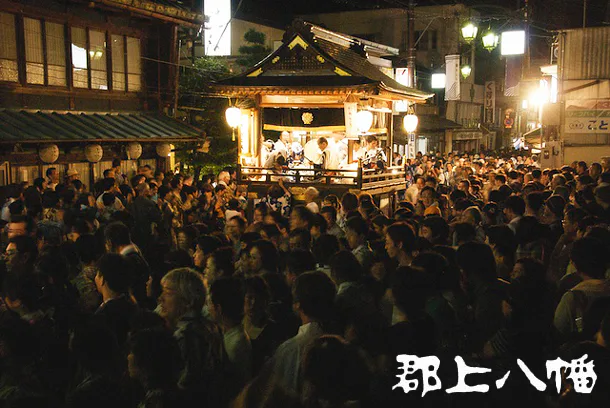
Gujo Odori is built for participation rather than seated viewing. The 2026 season runs from July 11 to September 5, with regular dance nights and four all-night Obon sessions. Start with the main Gujo Odori 2026 guide if you are still choosing a date; July 19 is useful as an example of a normal night rather than the much more intense overnight format.
July 19 uses the Former Town Hall square
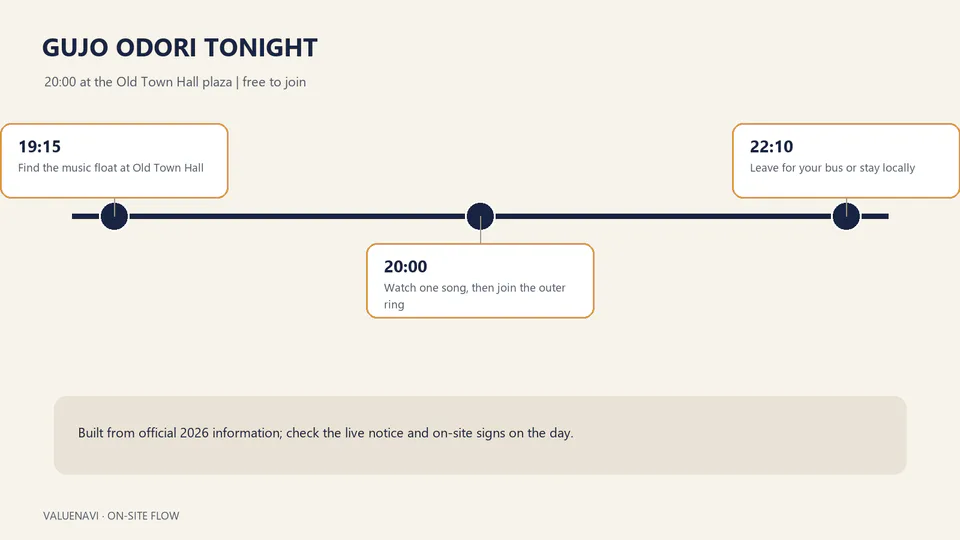
For July 19, 2026, the official Japanese date page places the dance in front of the Former Town Hall for the Tokiwa Electric Jizo Festival and lists 20:00–22:30. The English schedule page has shown conflicting end-time text in parts of the site, so use the date-specific page on the day. If the famous overnight version is what you actually want, compare the four dates in the Gujo Odori all-night dance guide instead of copying this regular-night plan.
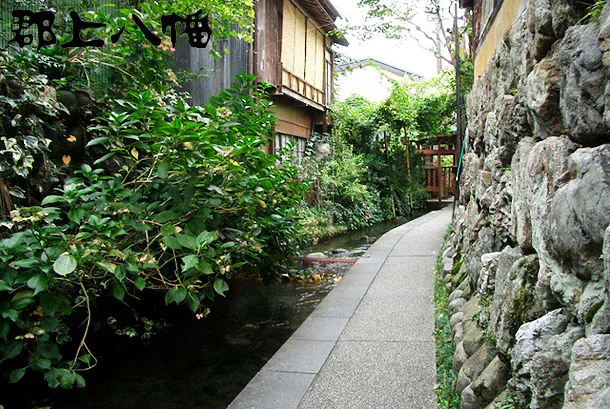
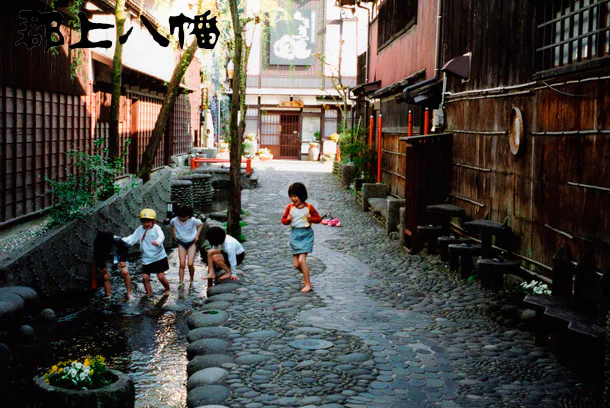
Arrive before dark to learn the town rather than appearing at 19:55 and trying to decode everything at once. A useful daytime sequence is the food-replica shops, the water lanes around Igawa and Yanaka, and an early keichan meal. This leaves the evening free for dancing rather than sightseeing. Travellers building a wider first Japan itinerary can compare how many rural stops fit realistically in the 10-, 12- or 14-day Japan route.

Use the afternoon to make the first dance easier
The official summer dance lessons at the Former Town Hall are a practical option for beginners because they separate Kawasaki, Gen Gen Bala Bala, Haru Koma and other patterns into short sessions. Even without a lesson, watch one readable dancer rather than five people at once. If heat is the bigger issue, the same pacing logic used in the Koenji Awa Odori daytime-stage guide applies here: protect your stamina before the main evening event.
The dance circle has no formal spectator boundary
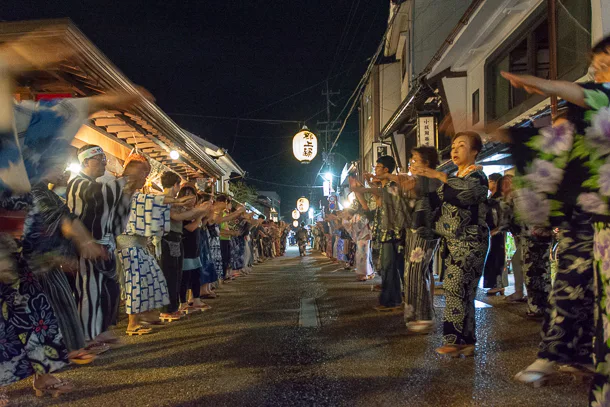
Visitors can enter and leave the moving ring without registration. Start on the outer edge, keep steps compact and move with the direction of the group. Do not stop inside the line to film. The experience is very different from the ticketed-and-free venue system at Tokushima Awa Odori or the seated-anchor approach described for Kochi Yosakoi viewing.
Pair this with: choose the festival style before booking hotels
For a broader summer-festival trip, compare the slower traditional atmosphere of Owara Kaze no Bon, the late-arrival strategy for Yamagata Hanagasa and the daylight-versus-lantern choice at Kishiwada Danjiri. They demand different stamina, transport and hotel decisions even though all are often grouped as “summer festivals.”
Footwear decides whether the last hour is enjoyable
Yukata and geta are optional. If you buy geta locally, have the strap adjusted and test them before committing to a full evening. Comfortable shoes are a sensible backup. Carry water, identify toilets before dark and keep luggage at your accommodation or a station locker. The same “leave before exhaustion” logic is useful for Kishiwada Danjiri arrival timing and other long festival days.
Photography is easiest from outside the ring
The Former Town Hall, lanterns, live music float and moving dancers can fit in one frame from the outside edge. Avoid flash, backward walking and tripods that obstruct the route. If your priority is a slower illuminated-festival atmosphere rather than moving dancers, compare Otsu Matsuri’s lantern night and main parade.
Stay locally if the final dance matters to you
A regular night is simpler than Obon, but the safest plan still works backwards from your real bus or accommodation. If you must catch transport, leave before the final song rather than assuming a taxi will appear beside the float. For travellers chaining several events, the Japan summer-festivals comparison helps decide which nights deserve local accommodation.
USJ Halloween 2026 One-Day Itinerary: Opening to Horror Night
Tokyo Game Show 2026: Fast Ticket, First-Hall Trap and Family Cost
Grand Hirafu Ski Guide 2026–27: Powder, Crowds, Lifts and Night Skiing
References
Gujo Hachiman official tourism — 2026 Gujo Odori schedule
Gujo Hachiman official tourism — July 19, 2026 Former Town Hall location