
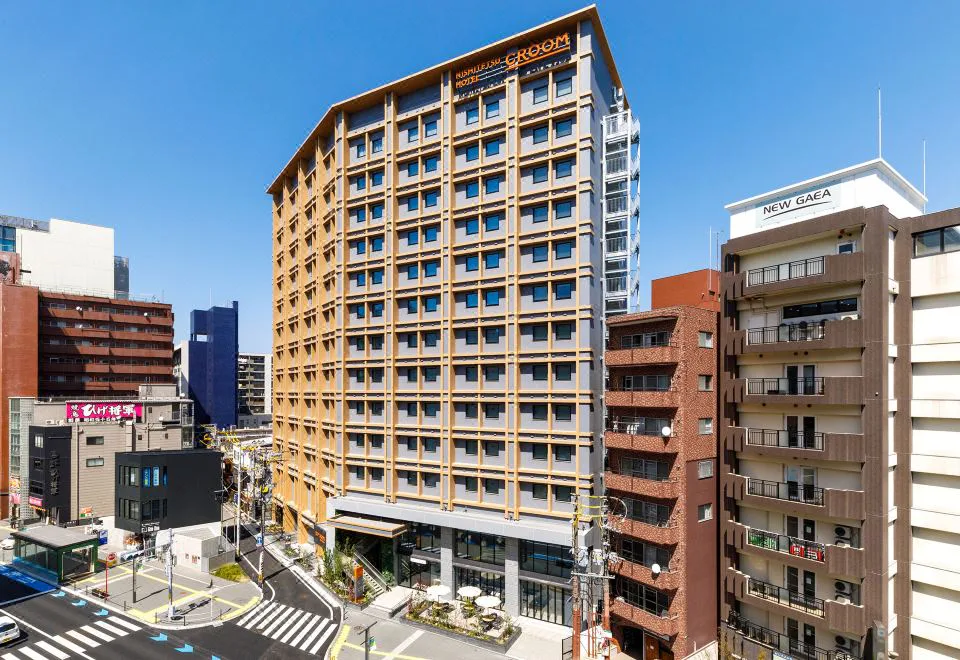
Nishitetsu Hotel Croom Hakata Gion solves a real Japan group-travel problem: the 30.4 m² Comfort Fourth can keep up to six people in one room. But capacity and comfort are different questions. At four occupants, the room provides 7.6 m² of published gross room area per person; at six, that falls to about 5.1 m². That calculation does not represent usable free floor space, but it explains why the same room can feel like a smart family solution for four and a deliberate compression trade-off for six.
For four adults on a short stay, I would start by pricing one Comfort Fourth. For five or six adults, I would price two rooms at the same time and calculate the extra cost per person per night. Two rooms buy something the 30.4 m² headline cannot: a second private bathroom, separate sleep schedules and another place for luggage. Before choosing the room, compare the broader Fukuoka hotels for three or four adults and the Hakata vs Tenjin area decision.
The 30-second decision
↔ Scroll table left or right
Group | My starting point | Why |
4 people | One Comfort Fourth | 30.4 m² remains a credible short-stay group-room product if luggage is controlled. |
5 people | Price one room and two rooms | The fifth traveller adds luggage, bathroom demand and another sleep schedule without adding floor area. |
6 people | Two rooms become my baseline comparison | One room still works when staying together is the priority, but it should be an intentional compression decision rather than the automatic cheapest choice. |
I would choose one room when the group is close, the stay is short, luggage is modest and everyone accepts one shared morning routine. I would choose two rooms when privacy, large suitcases, different bedtimes or a four- to five-night stay matter more than keeping everyone behind one door.
The ValueNavi group-compression test
Room capacity tells you who may legally occupy the room. It does not tell you how the room behaves once luggage, shoes, chargers and six morning routines arrive. A simple derived check makes that pressure visible:
↔ Scroll table left or right
Occupancy | 30.4 m² ÷ guests | Decision meaning |
4 guests | 7.6 m² gross room area per guest | Reasonable starting point for a compact shared room. |
5 guests | 6.1 m² per guest | Start pricing the second room seriously. |
6 guests | 5.1 m² per guest | Capacity is proven; comfort is now highly dependent on luggage and group habits. |
This is not a floor-clearance measurement. Beds, bathroom, furniture and circulation all occupy part of the published 30.4 m². The value of the calculation is comparative: adding two people from four to six cuts the published gross area per person by roughly one third while the room itself does not change.
One room versus two: calculate the privacy premium instead of guessing
Do not compare only the headline totals. Use this calculation for your actual dates:
(two-room total − one Comfort Fourth total) ÷ number of guests ÷ number of nights = extra privacy cost per person per night.
If two rooms cost JPY 24,000 more over a three-night stay for six people, for example, the relevant difference is JPY 1,333 per person per night—not JPY 24,000 in one intimidating lump. That example is only a calculation illustration, not a quoted hotel rate. Exchange rates move, so compare the live JPY total on the same date and cancellation terms.
Once the premium is expressed per person per night, ask what it buys: two private bathrooms, two doors, more luggage floor, quieter sleepers and the ability for half the group to leave early without waking everyone. If those benefits are worth the calculated premium, the “cheaper one-room option” is no longer automatically the better value.
Bathroom throughput is the hidden six-person bottleneck
Six beds can be arranged inside one room; six people still have to get ready. If everyone needs to leave in the same 60–90 minute window, one private bathroom becomes the critical path. A public bath can reduce shower pressure for travellers who are comfortable with communal bathing and whose schedule fits the current operating hours, but it does not give the room a second private toilet or a second private wash routine.
That is why two rooms become disproportionately more useful for a six-person group with an early departure. You are not merely buying more square metres. You are doubling private bathroom capacity and creating two parallel morning routines. For a group that wakes and leaves at different times, that can matter more than the room-rate difference.
Four adults and six adults are different products in the same 30.4 m²
At four adults, 30.4 m² can still work as a compact group room because fewer bags and fewer bodies compete for the same paths. At six, every extra traveller adds shoes, jackets, toiletries, towels and devices. Shopping also accumulates during a multi-night stay. The six-person headline should therefore be read as a useful capacity ceiling, not a guarantee that six adults will experience the room as spacious.
For five or six adults, compare Solaria vs Croom for four adults and price two-room combinations before committing. The point is not that another hotel must win; the point is that group size changes which product dimensions matter.
Stay length changes the answer faster than the room name
One or two nights are the strongest case for six people sharing. The group can keep most luggage closed, tolerate a tighter morning and spend little time inside. By night four, the same room has accumulated shopping, laundry, wet umbrellas, chargers and different sleep schedules. That is when a second room can pay back even if the first-night experience seemed fine.
A simple boundary condition works well here: if the group is five or six adults, carrying several full-size suitcases and staying four nights or more, I would require the one-room option to show a meaningful per-person saving before accepting the compression. If the saving is small, two rooms are the more resilient choice.
Kushida Shrine Station is useful—but it is not JR Hakata Station
The hotel’s location works well for central Fukuoka sightseeing and access around Kushida Shrine, Canal City and Gion. It is less compelling when the entire group repeatedly needs very early JR or Shinkansen departures from Hakata Station. Six people making one extra transfer together creates more friction than the same transfer for one solo traveller.
If there is one early departure, the group can absorb it. If several mornings begin at Hakata, compare Miyako Hotel Hakata and the Hakata Station hotel comparison. A true Hakata base can remove a repeated group movement even if its room arrangement costs more.
The public bath helps one-room groups only under the right conditions
The public bath is operationally useful because it can let part of the group bathe outside the room while someone else uses the private bathroom. That creates parallel capacity. But the benefit disappears for travellers who do not use communal baths, for groups returning outside current hours, or for anyone who needs the private bathroom for accessibility or personal reasons.
If laundry matters more than maximum occupancy, compare the Croom washer-dryer versus separate-bath guide. A longer stay may work better with two smaller rooms or another room type than with six people sharing Comfort Fourth simply because six is allowed.
A 22:00 arrival exposes the one-room failure mode
Imagine six travellers arriving around 22:00. Everyone needs to bring luggage in, find sleepwear, charge phones, decide who showers first and prepare for the morning. The room can sleep six, but the workflow is sequential unless some guests use the public bath or postpone tasks. Now add a 07:30 departure: the same sequence must run in reverse under a deadline.
That is the most important distinction between capacity and resilience. A room can technically accommodate the group while still creating a fragile routine in which one late shower or blocked suitcase path delays everyone. Two rooms reduce that single-point-of-failure risk.
Do not treat OTA requests as guaranteed room features
Nishitetsu Hotel Group explicitly states that special requests entered through overseas booking sites such as Agoda, Booking.com and Expedia are treated as preferences and may not be fulfilled depending on availability and operating conditions. If bed arrangement, nearby rooms or another request is essential to making the group plan work, do not build the entire stay around a request box that is not a guarantee.
This matters more for groups because one failed assumption can affect several travellers at once. Verify the exact registered occupancy, room name, bedding shown in the confirmed plan and any essential arrangements before the free-cancellation deadline.
Pair the room decision with the actual Fukuoka itinerary
Use the first-visit three-day Fukuoka route and the Fukuoka yatai guide to decide whether Kushida Shrine/Gion is genuinely the right centre of gravity. If Tenjin dominates the evenings, compare Solaria Nishitetsu Hotel Fukuoka. If Yufuin follows Fukuoka, use Fukuoka to Yufuin and the Japan luggage-forwarding guide before bringing every full-size case into a compact group-room setup.
Check the exact Comfort Fourth plan
Hold the same dates, guest count, breakfast, cancellation deadline and taxes constant. Compare the one-room plan against a genuine two-room plan rather than comparing unrelated headline rates.
Booking.com — check Comfort Fourth availability
Trip.com — compare the same group-room plan
Agoda — compare the same room and cancellation terms
Final verdict
For four people on a short stay, the 30.4 m² Comfort Fourth is a credible one-room solution. At five guests, price two rooms seriously. At six adults, I would make two rooms the baseline comparison and choose one room only when staying together is worth the tighter luggage, bathroom and sleep-schedule trade-offs. The six-person capacity is useful; it is not proof that six adults will find the room spacious.
WeBase Hakata vs UNPLAN Fukuoka: Which Is Better for Remote Work?
Solaria Nishitetsu Hotel Fukuoka vs ONE FUKUOKA HOTEL: Which Tenjin Stay Fits?
Centara Grand Hotel Osaka: Is the 40m² Family Room Worth It for Four?
Fukuoka Hotels for Day Trips: Choose Hakata or Tenjin by Where Your Mornings Start


Sources
Nishitetsu Hotel Croom Hakata Gion — official Comfort Fourth room page
Nishitetsu Hotel Croom Hakata Gion — official Triple room page
Nishitetsu Hotel Croom Hakata Gion — official Stay Type room page
Nishitetsu Hotel Group — overseas booking-site request policy, January 14, 2026
Room types, capacity, rates, availability and operating conditions can change. This article may contain affiliate links; ValueNavi may earn a commission from qualifying bookings at no additional cost to you.